
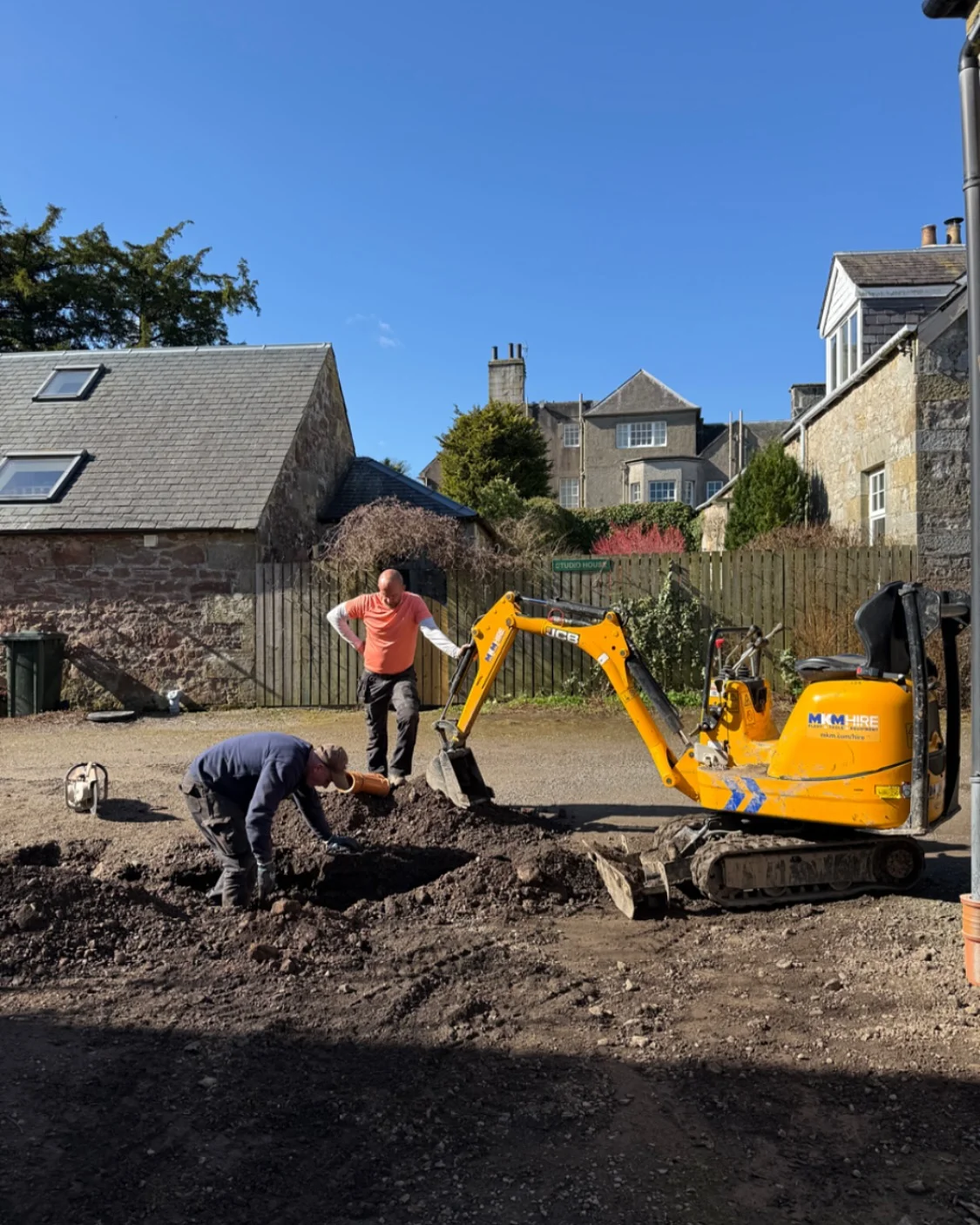
You’ve got a project in mind. Maybe it’s a damaged driveway that needs proper attention, a drainage pipe that keeps causing problems no matter how many times it’s cleared, a retaining wall that’s started to lean, or a patch of groundwork that needs doing before you can move forward with something bigger. You know it needs a professional, but it doesn’t feel large enough to be calling a major construction company.
This is where small civil works comes in. It’s a category of work that sits between what a general handyman can tackle and what requires a full-scale contractor, and it covers a surprisingly wide range of practical, important jobs that properties of all kinds need done from time to time.
In this guide, we’ll explain what small civil works actually covers, when you need it, what to look for in a contractor, and how to make sure the job gets done properly the first time. If you’ve been searching for small civil works services in Scotland and aren’t quite sure what fits your situation, this is a good place to start.
What Are Small Civil Works?
Civil works, broadly speaking, refers to construction and infrastructure work that involves the ground, drainage, structures, and outdoor surfaces. Small civil works takes this same discipline and applies it to the scale most homeowners and smaller businesses actually deal with, targeted, specific jobs that need proper planning, the right equipment, and experienced hands, but don’t require a large construction crew or months of work.
Here are some common examples:
- Drainage repairs and pipe replacement, fixing collapsed, cracked, or poorly laid drainage pipes; re-routing drain runs; installing new drainage systems as part of a development
- Excavation and groundworks, digging out areas for new builds, extensions, outbuildings, or utility access
- Concrete and surfacing work, laying or repairing concrete bases, hardstandings, driveways, and paths
- Retaining walls and boundary structures, building or repairing walls that hold back soil, manage levels, or define boundaries
- Culvert installation and repair, managing watercourses that run under roads, driveways, or access tracks
- Soakaway installation, creating new soakaways for surface water drainage or as part of septic tank system upgrades
- Manhole construction and repair, installing new access chambers or fixing damaged ones
- Trench digging and backfilling, for utility runs, drainage, or cable installation
What these jobs have in common is that they all involve working with the ground, drainage infrastructure, or outdoor structures, and they all require knowledge, proper equipment, and an understanding of how to do the work in a way that lasts.
Why Small Civil Works Often Gets Overlooked
A lot of people put these kinds of jobs off longer than they should. Part of it is uncertainty, you’re not sure exactly who to call, whether it counts as “too small” for a proper contractor, or whether it might sort itself out. Part of it is simply not knowing what the job involves or what it should cost.
The reality is that most small civil works projects have a tendency to get worse when ignored. A cracked drain continues to leak and can undermine nearby ground. A poorly draining surface gets worse through each Scottish winter. A failing retaining wall puts more stress on the structure with every season. Catching these things early, and getting them fixed properly, is almost always cheaper and less disruptive than dealing with the consequences later.
Getting the right person for the job matters too. Small civil works requires specific skills and equipment. A general builder might be comfortable laying a patio but not equipped or experienced to handle drainage excavation properly. A specialist drainage company might manage pipe repairs but not take on groundworks. Finding someone who genuinely covers the full range, and does each part well, makes the whole process simpler.
What the Process Typically Looks Like
Every small civil works job is different, but there’s a general shape to how good contractors approach them.
Assessment and scoping
Before anything starts, a proper site visit and assessment is essential. For drainage work, this might involve a CCTV survey to understand what’s going on underground before anyone picks up a spade. For groundworks or surfacing, it means looking at the ground conditions, access, levels, and what the finished result needs to achieve. Rushing straight to digging without understanding the situation properly is how costly mistakes happen.
Planning the work
Even for relatively small jobs, a bit of planning goes a long way. This includes understanding where utilities are buried (gas, water, electricity, telecoms), what materials are needed, how spoil will be removed, and what the finished surface or drainage run needs to look like. Any works near watercourses or in areas with planning restrictions may also need to be checked against local regulations.
The work itself
This varies enormously depending on the project. Excavation might be done by hand in tight spaces or with a mini-digger where access allows. Pipe-laying requires correct falls (the angle of the pipe to ensure drainage flows correctly), proper bedding material, and correct backfilling to avoid future settlement. Concrete work needs the right mix and adequate curing time. Retaining walls need proper foundations and, where relevant, drainage behind them to prevent water pressure building up.
Finishing and reinstatement
A quality contractor leaves the site in good order. Any disturbed surfaces are reinstated, the area is cleaned up, and where drainage work has been done, a final check confirms everything flows as it should.
Practical Tips for Getting Small Civil Works Done Right
Do:
- Get a clear, written scope of work and quote before agreeing to anything, verbal agreements are too vague for this type of project
- Ask whether a CCTV survey is needed before any drainage excavation, it avoids unnecessary digging and confirms exactly what the problem is
- Check that the contractor understands Scottish building regulations and SEPA requirements where relevant, particularly for drainage work near watercourses
- Make sure access for equipment is thought through in advance, mini-diggers and tankers need routes in and out
- Ask for a completion check and, for drainage work, post-completion footage showing the finished pipe run
Don’t:
- Choose a contractor purely on price, unusually cheap quotes often mean corners are cut, wrong materials are used, or the work isn’t done to last
- Assume the cheapest fix is the right one, sometimes a repair is appropriate; sometimes replacement is the better long-term decision
- Let groundworks start without checking for buried utilities, contact Dial Before You Dig (Scotland uses the same UK-wide service) to have services located
- Ignore drainage problems near foundations, water in the wrong place near a building is one of the most damaging things that can happen to a structure over time
- Skip the reinstatement, ground left poorly backfilled will settle, surfaces will sink, and you’ll have another problem to fix
Common Mistakes to Avoid
One thing that comes up regularly with small civil works is people getting drainage and groundworks done separately, by different contractors who don’t communicate with each other. This leads to situations where a new surface is laid over drainage that wasn’t sorted first, or where drainage work is done without accounting for how the finished levels will affect surface water run-off.
The other common mistake is treating a repair as permanent when the underlying problem actually calls for replacement. A cracked clay pipe can be repaired with a patch liner, but if the pipe is old, fragile, and showing multiple points of failure, patching one section just shifts the problem a few metres down the line. A contractor who gives you an honest assessment of the full picture is worth more than one who tells you only what you want to hear.
Why Choose Drain Master Scotland?
For homeowners and businesses across Perth and Perthshire, Drain Master Scotland handles the full range of small civil works services in Scotland that local properties actually need. From drainage repairs and excavation through to soakaway installation, concrete groundworks, and pipe replacement, the team brings proper knowledge and the right equipment to jobs of all sizes within this space.
What makes Drain Master Scotland stand out isn’t just the range of work they take on, it’s the approach. Jobs start with a proper assessment. Where drainage is involved, CCTV surveys are used before work begins so everyone knows exactly what they’re dealing with. The work is done with the right materials and methods, not the quickest ones. And when the job is done, you get a straight account of what was found, what was done, and whether anything else needs attention.
The team works across rural and urban Perthshire, which matters. Rural properties often have different challenges, access, drainage field considerations, older infrastructure, watercourse proximity, and Drain Master Scotland has the experience to deal with all of it without making it more complicated than it needs to be.
Conclusion
Small civil works covers a broad range of practical, necessary jobs that properties across Perth and Scotland need done properly. Whether it’s drainage excavation, groundworks, surfacing, soakaway installation, or concrete work, these are projects where the quality of the work has a direct impact on how long the result lasts and what problems you avoid further down the line.
The key is finding a contractor with the right skills, the right equipment, and an honest approach, someone who assesses the job thoroughly before starting, does the work properly, and leaves the site finished to a standard you’d be satisfied with years later.
If you’ve got a small civil works project in Perth or the surrounding area, Drain Master Scotland is well worth a conversation. They’ll give you a straight assessment and a clear picture of what the job actually involves.
Frequently Asked Questions
What counts as small civil works versus a major construction project?
There’s no strict legal definition, but small civil works generally refers to targeted groundwork, drainage, surfacing, or structural jobs that can be completed by a small specialist team, typically within days rather than weeks or months. Think drainage pipe replacement, soakaway installation, concrete hardstandings, retaining wall repairs, or culvert work. It’s distinct from large-scale construction like housing developments or major road schemes, but requires the same underlying knowledge and proper equipment.
Do I need planning permission for small civil works on my property?
It depends on the nature of the work. Most drainage repairs and routine groundworks on private property don’t require planning permission. However, works near watercourses, changes to surface water drainage that affect neighbouring land, or certain types of structures may be subject to Scottish planning regulations or SEPA licensing requirements. A reputable contractor will flag this during the assessment stage if it’s relevant to your project.
How do I know if my drainage needs repair or full replacement?
This is exactly the kind of question a CCTV survey answers. By putting a camera through the pipe, a drainage engineer can see the condition of the full run, whether you have a single point of failure that can be repaired, or whether the pipe is deteriorating across its length and replacement is the more sensible long-term decision. Trying to make that call without camera footage is guesswork.
How long does a typical small civil works project take?
It varies considerably depending on the scope. A straightforward drainage repair with excavation might be completed in a day. A soakaway installation or concrete hardstanding could take two to three days. More involved groundworks projects or multi-element jobs take longer. A contractor who’s assessed your site properly will be able to give you a realistic timeline before work starts.
Can small civil works be done during winter in Scotland?
Most work can continue through winter, though ground conditions do affect some aspects of the job, concrete needs to be protected from frost while curing, and very waterlogged ground can complicate excavation. A good contractor will work with the conditions rather than against them, and will be upfront with you if weather is likely to affect the timeline or approach.