
That slow-draining sink you keep ignoring? It might be trying to tell you something big! A blocked sewer line rarely shows up out of nowhere. Your home drops little hints first, and once you learn to spot them, you can fix a small problem before it turns into a smelly, expensive disaster.
In this guide, you’ll discover the most common signs your sewer line is clogged, what usually causes the trouble, and exactly what to do next. Here’s a quick preview of what we’ll cover:
- The clearest warning signs of a blocked sewer pipe
- The everyday causes behind a clogged sewer line
- Simple, practical steps to protect your home
Let’s dig in!
What Your Sewer Line Actually Does
Think of your main sewer line as the hardworking highway for everything that leaves your home. Every flush, every shower, every load of laundry, and every sink of dishwater travels through that single pipe on its way out. When it’s flowing freely, you never think about it. When it clogs, though, you notice fast.
That pipe does more than carry wastewater away. It keeps bacteria, damp, and nasty smells out of your living space. So when it struggles, your whole home feels it. The good news? Your property gives you plenty of early warnings, and catching them quickly saves a world of hassle.
Top Signs Your Sewer Line Is Clogged
Here’s how to tell if your sewer line is blocked. One quirky drain might be nothing. But when several of these blocked sewer symptoms show up together, that’s your cue to act.
Slow Drains Across Multiple Fixtures
One sluggish sink? Probably just hair or soap scum. But when the kitchen sink, shower, bathroom basin, and toilet all start draining slowly at once, that’s a red flag. A single trapped fixture is local. Trouble everywhere points to your main line.
Gurgling Toilets and Drains
That “glug-glug” noise isn’t your plumbing chatting for fun. It’s air escaping around a blockage. If you flush the toilet and the nearby sink gurgles back, your main sewer line is struggling to breathe. Don’t brush it off, it’s one of the clearest signs of a blocked sewer pipe.
Foul Sewage Smells
Catching a rotten-egg whiff indoors or out in the garden? Sewage odours are never normal. Sometimes it’s a dried-out trap, but often it means waste is sitting in the line with nowhere to go. When you smell it, something needs looking at.
Sewage Backing Up
This is the one nobody wants. When water or waste creeps up through floor drains, the toilet, or the shower, the blockage is deep and serious. A main sewer line clogged this badly won’t clear itself, and it can quickly become a health risk.
Soggy Patches in the Garden
Notice a damp, boggy patch that never dries out, especially over the route of your pipe? Leaking wastewater is likely feeding the ground below. You might even spot one patch of grass that’s suspiciously greener and lusher than the rest. That “miracle” lawn is often a warning sign underground.
Fluctuating Toilet Water Levels
Keep an eye on your toilet bowl. If the water level rises and falls on its own, or drops when you run another fixture, that’s your plumbing signalling a blockage further down the line.
Quick takeaway: One sign is a nuisance. Two or more together usually mean your main line needs professional attention.
Common Causes of a Clogged Sewer Line
Understanding what’s happening down there helps you prevent it next time. Here in Scotland, a few culprits show up again and again.
- Tree roots. Roots chase moisture, and a tiny crack in an old pipe is an open invitation. Once inside, they thicken and tangle until flow slows to a trickle.
- Grease and FOG buildup. Fats, oils, and grease cool and cling to pipe walls like fat in an artery. Add wipes or so-called “flushable” products, and you’ve built a stubborn clog no shop-bought cleaner will shift.
- Ageing or damaged pipes. Older cast iron rusts, joints loosen, and pipes eventually crack or collapse. Many Scottish properties have decades-old drainage that simply wears out.
- Ground movement. Our wet weather and shifting soil put real pressure on underground pipes. Heavy rain, freeze-thaw cycles, and settling ground can bend or fracture a line without a single sign above the surface.
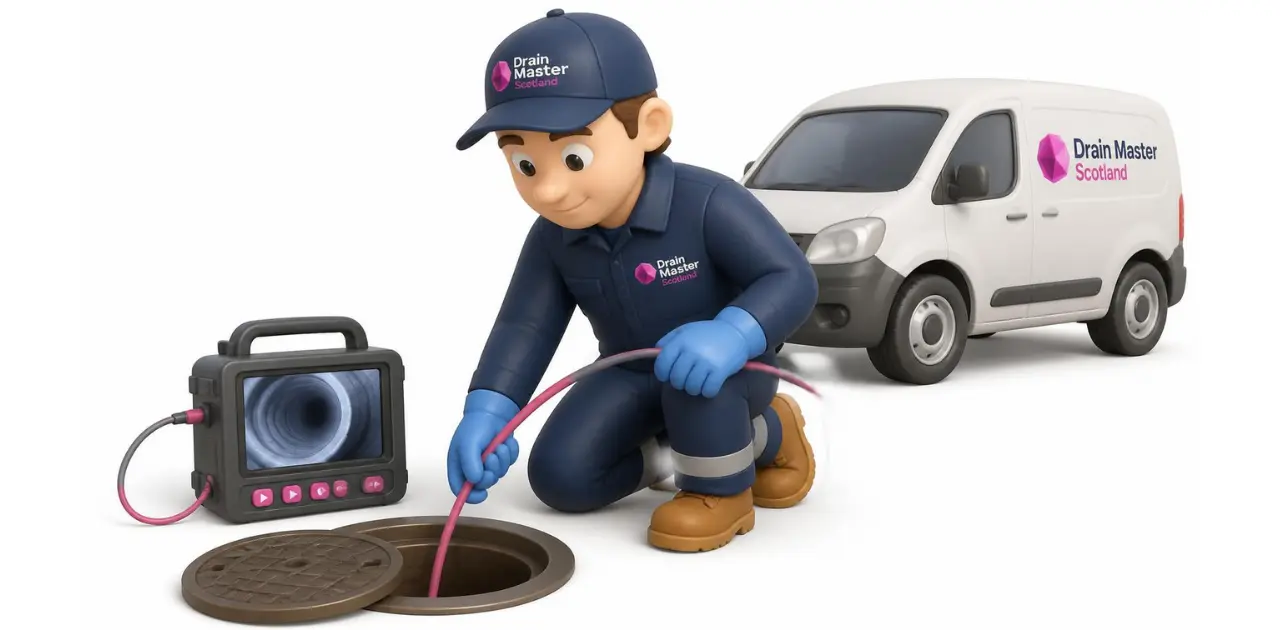
If you’re unsure what’s causing the problem, a camera inspection takes the guesswork away. Our Drain Surveys Scotland team runs a small camera through your pipes to pinpoint the exact issue, whether that’s roots, a crack, or a solid blockage.
What to Do When You Spot the Signs
First, resist the urge to keep tipping drain cleaner down the pipe. Harsh chemicals rarely clear a deep clog and can damage older pipework. Here’s a smarter approach.
- Stop using water. Ease the pressure on the line so waste doesn’t back up further.
- Check whether it’s one fixture or many. This tells you if the trouble is local or in the main line.
- Call in the professionals. For a stubborn blockage, expert help is the fastest, safest route.
Depending on what we find, our Drain unblocking Services clear the obstruction quickly, while our high-pressure Drain Jetting Services blast away grease, roots, and debris to restore full flow. If the trouble starts at the loo, our Toilet Drain Unblocker team sorts it fast, and we cover blocked toilets right across Dundee.
For homes running on a septic system, keeping the tank healthy matters just as much, which is where our Septic Tank Services come in. And when a pipe has collapsed and needs proper access, our Expert Drain Excavation Services handle the heavy work with minimal fuss.
Why Acting Fast Really Matters
Here’s the honest truth from years on the tools: a small clog never gets better on its own. It quietly worsens until one day it shuts everything down. Catch it early and the fix is quick and tidy. Leave it, and you’re looking at flooded floors, ruined flooring, and a serious clean-up.
Acting fast keeps sewage where it belongs, protects your property from damp and damage, and spares you the stress of a full-blown emergency. It really is the difference between a quick visit and a major job.
Simple Prevention Tips
A little care goes a long way. Try these easy habits:
- Never pour grease or oil down the sink. Let it cool and bin it instead.
- Flush only human waste and toilet paper. Wipes and paper towels are clog machines.
- Fit drain strainers to catch hair and food scraps.
- Book a routine drain check to spot trouble before it starts.
Whether you look after a family home or a busy business, prevention protects you. Our Residential Drainage Services and Commercial Drainage Services keep your system flowing smoothly all year round.
Don’t Wait for a Full Backup
Spotting the signs your sewer line is clogged early is the smartest move you can make. If your drains are slow, gurgling, or smelling off, trust your instincts and get it checked. The friendly experts at Drain Master Scotland are on call day and night, with fast response across the region, including Perth. Give us a shout, and we’ll have your drains flowing freely again in no time!
Frequently Asked Questions
How can I tell if my sewer line is blocked or just a single drain?
If several fixtures drain slowly at once, it’s likely the main line. One slow drain usually means a local clog.
Are gurgling drains always a sign of a clogged sewer line?
Gurgling often means trapped air around a blockage, so it’s worth investigating quickly, especially if paired with slow drains or smells.
Can tree roots really block a sewer pipe?
Yes. Roots grow through small cracks chasing moisture and can fully block a pipe over time.
Is it safe to use chemical drain cleaners on a blocked sewer?
Not really. They rarely clear deep clogs and can damage older pipes, so professional help is safer.
What causes a soggy patch in my garden?
Leaking wastewater from a cracked or blocked sewer pipe often soaks the ground and can make grass grow unusually green.
How quickly should I act on blocked sewer symptoms?
As soon as possible. Early action prevents backups, property damage, and a much bigger repair later.