
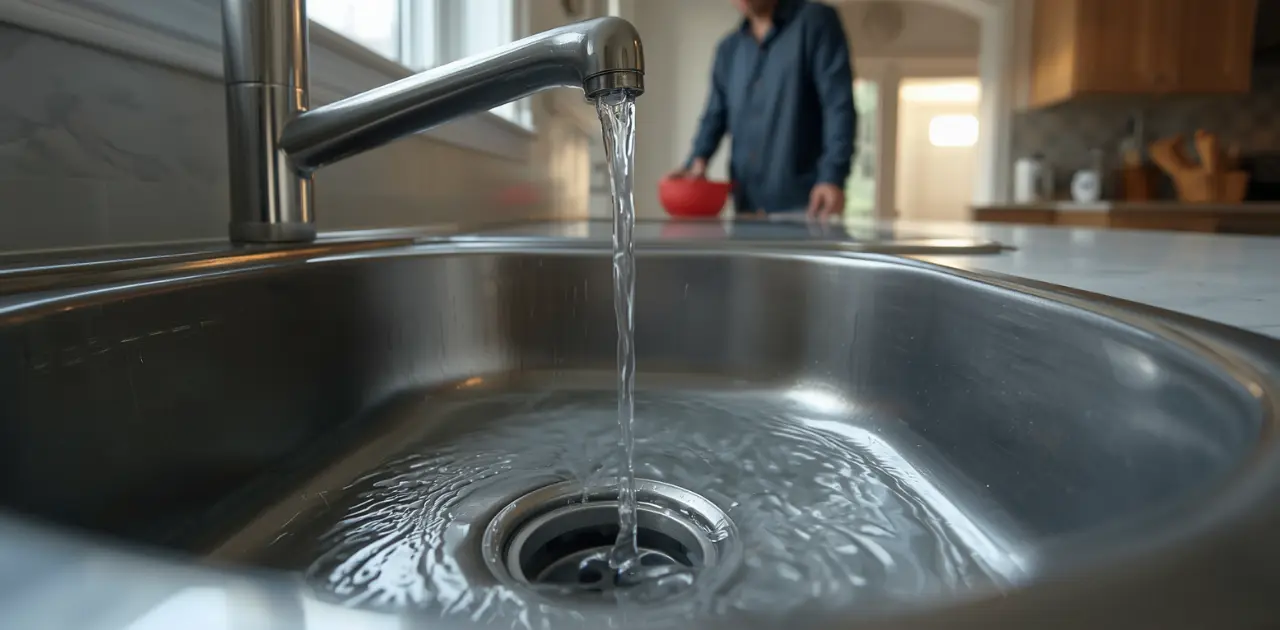
A slow draining sink or bath is almost always caused by a build-up of hair, soap scum, or grease inside the pipe. Most cases clear with a few simple steps at home. If the water still crawls away after that, it usually points to a deeper blockage that needs a professional.
You pull the plug and the water just sits there, swirling in slow motion. Sound familiar? A sink draining slowly is one of those small annoyances that quietly gets worse until you can’t ignore it. The good news is that learning how to fix a slow draining sink doesn’t take special skills or fancy tools.
Below, you’ll find the real reasons behind a slow drain, a clear step-by-step fix you can do yourself, and honest advice on when it’s time to call in the experts.
Why Is My Sink Draining Slowly?
Before you fix the problem, it helps to know what’s causing it. Most slow drains come down to a handful of everyday culprits.
- Hair: The number one reason a bath is slow to drain. It tangles around anything inside the pipe and traps everything else.
- Soap scum: Over time, soap hardens and sticks to the pipe walls, narrowing the space water can pass through.
- Grease and fat: In kitchen sinks, cooking fat cools and clings to the inside of the pipe until it forms a solid plug.
- Food waste: Bits of food slip past the plughole and settle where the pipe bends.
- A blocked trap: The U-shaped bend under your sink catches debris and is a common trouble spot.
If the water still moves but takes its time, you’re usually dealing with a partial blockage. Catching it early makes it far easier to clear.
How to Fix a Slow Drain: Step-by-Step
Here’s a straightforward routine that clears most slow drains. Work through the steps in order and stop once the water runs freely again.
Step 1: Clear the plughole
Start with the obvious. Pull out any visible hair or gunk sitting around the plughole. A pair of gloves and an old toothbrush make quick work of it. You’d be surprised how often this alone solves the problem.
Step 2: Try boiling water
For a kitchen sink slowed by grease, boiling water often does the trick. Pour it down slowly in two or three stages, giving it a moment to work between each pour. This melts soft fat and flushes it away.
Skip this step if your pipes are plastic and you’re unsure they can handle the heat.
Step 3: Use baking soda and vinegar
This old favourite still works. Tip half a cup of baking soda down the drain, followed by half a cup of white vinegar. Let it fizz for around ten minutes, then rinse with hot water. It breaks down mild build-up without any harsh chemicals.
Step 4: Plunge it
A cup plunger creates pressure that can shift a stubborn clog. Cover the plughole, add enough water to seal the rim, and plunge firmly several times. For a bath slow to drain, block the overflow with a damp cloth first so the pressure goes where you need it.
Step 5: Clean the trap
Still slow? It’s time to check the trap. Place a bucket underneath, unscrew the U-bend by hand, and clear out whatever’s trapped inside. Reattach it snugly and run the tap to check for leaks. This is messy but often the moment you find the real cause.
What to Avoid When Fixing a Slow Drain
Some quick fixes do more harm than good. Steer clear of these common mistakes:
- Harsh chemical cleaners: They can damage older pipes and rarely fix the root cause.
- Forcing wire down the pipe: You risk scratching or puncturing the pipework.
- Ignoring the problem: A slow drain today becomes a full blockage tomorrow.
When to Call a Professional
Sometimes a slow drain is a warning sign of something bigger. If you’ve tried the steps above and the water still struggles, the blockage likely sits deep in your drainage system, well beyond the reach of a plunger.
Call in a professional if you notice:
- Several drains slowing down at the same time
- A bad smell that won’t go away
- Water backing up into other sinks or the bath
- The same blockage returning again and again
These signs often point to a problem further along the pipe. Professional drain unblocking reaches these deeper clogs quickly and clears them for good, rather than just shifting them along.
For tougher build-up, such as hardened grease or root intrusion, high-pressure jetting blasts the pipe clean and restores full flow in one visit. It’s the kind of job that’s simply too big for a home fix.
Helpful Insights: Do’s and Don’ts
A few good habits keep your drains flowing and stop the slow-drain cycle from starting again.
Do:
- Fit a mesh strainer over the plughole to catch hair and food scraps.
- Run hot water down the kitchen sink after washing greasy pans.
- Clean the plughole every week or so as part of your routine.
- Deal with a slow drain early, before it turns into a full blockage.
Don’t:
- Pour cooking fat or oil down the sink let it cool and bin it instead.
- Rely on chemical cleaners as a long-term fix.
- Flush wipes, cotton pads, or anything but toilet paper down the toilet.
- Wait until the water stops draining completely before acting.
The most common mistake? Assuming a slow drain will sort itself out. It won’t. A little attention now saves a big headache later.
Why Choose Drain Master Scotland?
When a slow drain turns into something more, you want a team that gets it right the first time. Drain Master Scotland is Perth’s trusted drainage specialist, serving homes and businesses across Perth, Dundee, and the wider region.
Here’s what you can count on:
- 24/7 availability, so help is there when you need it
- Engineers on-site within an hour of your call
- Transparent pricing with no hidden charges
- The right equipment for everything from simple clogs to stubborn blockages
- Honest advice, never a hard sell
The team diagnoses the real cause of the problem, not just the symptom, so your drains stay clear long after the visit.
The Bottom Line on Slow Drains
A slow draining sink or bath is usually down to hair, soap, or grease, and most cases clear with a few simple steps at home. Start with the plughole, work through the fixes, and check the trap if the water’s still crawling away.
But if the blockage keeps coming back or several drains slow at once, that’s your cue to bring in the professionals before a small problem grows into a costly one.
Got a slow drain that won’t shift in Perth or Dundee? Get in touch with Drain Master Scotland and let the team get things flowing again.
Frequently Asked Questions
Why is my sink draining slowly all of a sudden?
A sudden slow drain usually means a fresh build-up of hair, grease, or food waste has narrowed the pipe. Clearing the plughole and trap often fixes it.
How do I fix a slow draining bath?
Remove any hair around the plughole, then plunge the drain while blocking the overflow with a cloth. If it’s still slow, the trap likely needs cleaning.
Are chemical drain cleaners safe to use?
They can damage older pipes and rarely solve the underlying cause. Boiling water or baking soda and vinegar are safer first choices.
When should I call a professional for a slow drain?
Call an expert if several drains slow at once, water backs up, or the same blockage keeps returning. These signs point to a deeper problem.
Can Drain Master Scotland clear a slow drain the same day?
Yes. With 24/7 availability and engineers usually on-site within an hour, most slow drains and blockages are cleared on the first visit.