
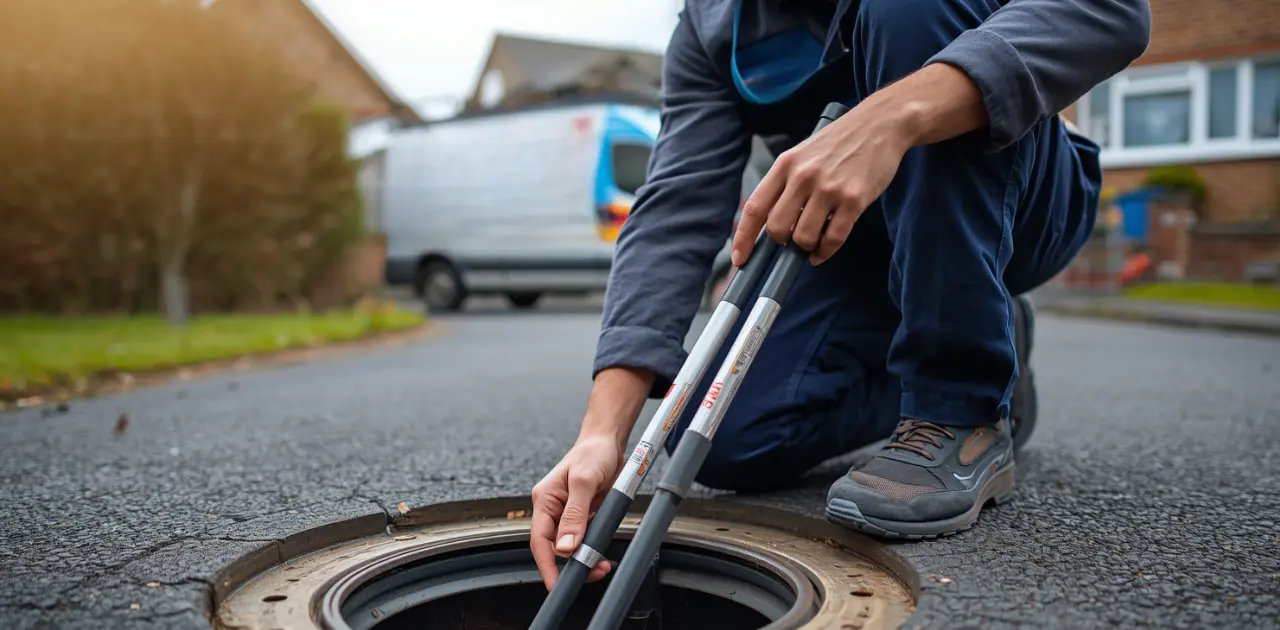
Drain rodding is a manual method of clearing blocked drains using flexible rods that screw together and push through the pipe to break up or dislodge a blockage. It’s best for minor, accessible clogs, while high-pressure jetting handles tougher, deeper build-up.
You flush the toilet and the water creeps up instead of down. Or the kitchen sink gurgles and refuses to drain. A blocked drain always seems to strike at the worst moment, and your first thought is usually the same: how do I get this cleared, fast?
That’s where drain rodding often comes in. It’s one of the oldest and most trusted ways to shift a blockage, and it’s still used by professionals across Perth and Dundee every single day.
This guide breaks down what drain rodding actually is, how the process works, and how it stacks up against high-pressure jetting. By the end, you’ll know exactly which method suits your situation.
What Is Drain Rodding?
Drain rodding is a manual technique for clearing blocked drains using a set of flexible rods. These rods screw together end to end, forming one long, bendable tool that can be pushed through your pipework.
Once the rods reach the blockage, you twist and push them to break the obstruction apart or dislodge it so water can flow freely again. Different attachments can be fitted to the end of the rods, such as a plunger head, corkscrew, or scraper, depending on what’s causing the clog.
It’s a simple idea, and that’s exactly why it works. There are no chemicals, no digging, and no complicated machinery involved. For many common household blockages, rodding is all you need.
How Does Drain Rodding Work?
The process is straightforward, but doing it properly takes a bit of know-how. Here’s how a typical rodding job unfolds:
- Locate the access point. This is usually a rodding eye or an external manhole cover that leads into the drain.
- Choose the right attachment. The head depends on the blockage. A corkscrew grips debris like wipes or roots, while a plunger head pushes water pressure against a soft clog.
- Feed the rods in. The rods are inserted one section at a time and gradually pushed toward the blockage.
- Twist clockwise as you go. Always turn the rods clockwise. Twisting the other way can unscrew them and leave a section stranded in the pipe.
- Break up the blockage. Once you reach the obstruction, a mix of pushing and twisting clears the way.
- Flush and check. Running water through confirms the drain is flowing properly again.
Done right, rodding can clear a blockage in minutes. Done wrong, you risk losing a rod in the pipe or pushing the clog further along, which is why many people call in a professional for peace of mind.
Drain Rodding vs Jetting: What’s the Difference?
Both methods clear blocked drains, but they work in completely different ways. Understanding the difference helps you pick the right one.
Drain rodding relies on physical force. The rods are pushed by hand to break through or drag out a blockage. It’s affordable, low-tech, and ideal for minor clogs close to an access point.
High-pressure drain jetting uses a flexible hose that blasts water into the pipe at extreme pressure. It cuts through grease, silt, tree roots, and even hardened build-up, then washes the debris away entirely.
Here’s how they compare:
| Feature | Drain Rodding | Jetting |
|---|---|---|
| Method | Manual rods and force | High-pressure water |
| Best for | Minor, accessible blockages | Tough, deep, or recurring build-up |
| Cleaning power | Breaks up the clog | Cuts through and flushes debris |
| Reach | Limited by rod length | Reaches further into the system |
| Cost | Generally lower | Slightly higher for the equipment |
Choose rodding if the blockage is minor, recent, and near an easy access point. Choose jetting if the problem keeps coming back, sits deep in the system, or involves stubborn grease and roots that rodding simply can’t shift.
When Is Rodding the Right Choice?
Rodding shines in specific situations. It’s often the best first step when:
- The blockage is close to a rodding eye or manhole.
- You’re dealing with a soft clog, like a build-up of paper or food waste.
- The pipe is a manageable length and easy to reach.
- You want a quick, low-cost fix without heavy equipment.
If the blockage is deeper than the rods can reach, or if it keeps returning despite repeated clearing, rodding usually isn’t enough. That’s the point where high-pressure jetting or a CCTV survey becomes the smarter option, since a recurring blockage often points to a bigger underlying problem.
Helpful Insights: Do’s and Don’ts
A few simple habits make all the difference when it comes to rodding.
- Do:
- Always turn the rods clockwise to keep them locked together.
- Use the correct attachment for the type of blockage.
- Flush plenty of water through once the drain clears.
- Call a professional if the rods won’t reach the blockage.
Don’t:
- Force the rods if they meet solid resistance, as this can damage older pipes.
- Twist anti-clockwise, or you’ll risk leaving a rod stuck in the drain.
- Pour chemical cleaners down first, since they can splash back during rodding.
- Ignore a blockage that keeps returning, as it rarely fixes itself.
The most common mistake? Pushing too hard and losing a rod inside the pipe. When that happens, a small job suddenly becomes a much bigger one.
Why Choose Drain Master Scotland?
When rodding alone won’t do the trick, you want a team that knows exactly which method your drain needs. Drain Master Scotland has spent years clearing blocked drains for homes and businesses across Perth and Dundee.
Our engineers arrive fully equipped, whether the job calls for straightforward drain unblocking or powerful high-pressure drain jetting for tougher blockages. We diagnose the real cause, not just the symptom, so the problem stays fixed.
We’re available 24/7, and our engineers are typically on-site within an hour thanks to our central Perth base. No hidden charges, no fuss, just a drain that flows the way it should.
The Bottom Line on Drain Rodding
Drain rodding is a proven, no-nonsense way to clear minor blockages using flexible rods and a bit of force. For deeper, tougher, or recurring problems, jetting takes over with the power to cut through and flush out even the most stubborn build-up.
Knowing which method fits your situation saves you time, money, and stress. And when you’re not sure, a quick call to the experts settles it.
Got a blocked drain in Perth or Dundee? Contact Drain Master Scotland today and let our team get things flowing again.
Frequently Asked Questions
What is drain rodding used for?
Drain rodding is used to clear minor blockages in accessible drains by pushing flexible rods through the pipe to break up or dislodge the obstruction.
Is drain rodding better than jetting?
Neither is universally better. Rodding suits small, easy-to-reach clogs, while jetting is better for deep, tough, or recurring blockages that need high-pressure water to shift.
Can I do drain rodding myself?
You can for simple blockages, but there’s a real risk of losing a rod or pushing the clog deeper. For anything stubborn, a professional service is safer and faster.
How much does drain rodding cost in Scotland?
Costs vary depending on the blockage and access, but rodding is generally cheaper than jetting. Drain Master Scotland offers transparent pricing with no hidden charges.
Where can I find drain rodding near me in Perth or Dundee?
Drain Master Scotland provides drain rodding and unblocking services across Perth, Dundee, and the wider region, with engineers usually on-site within an hour