
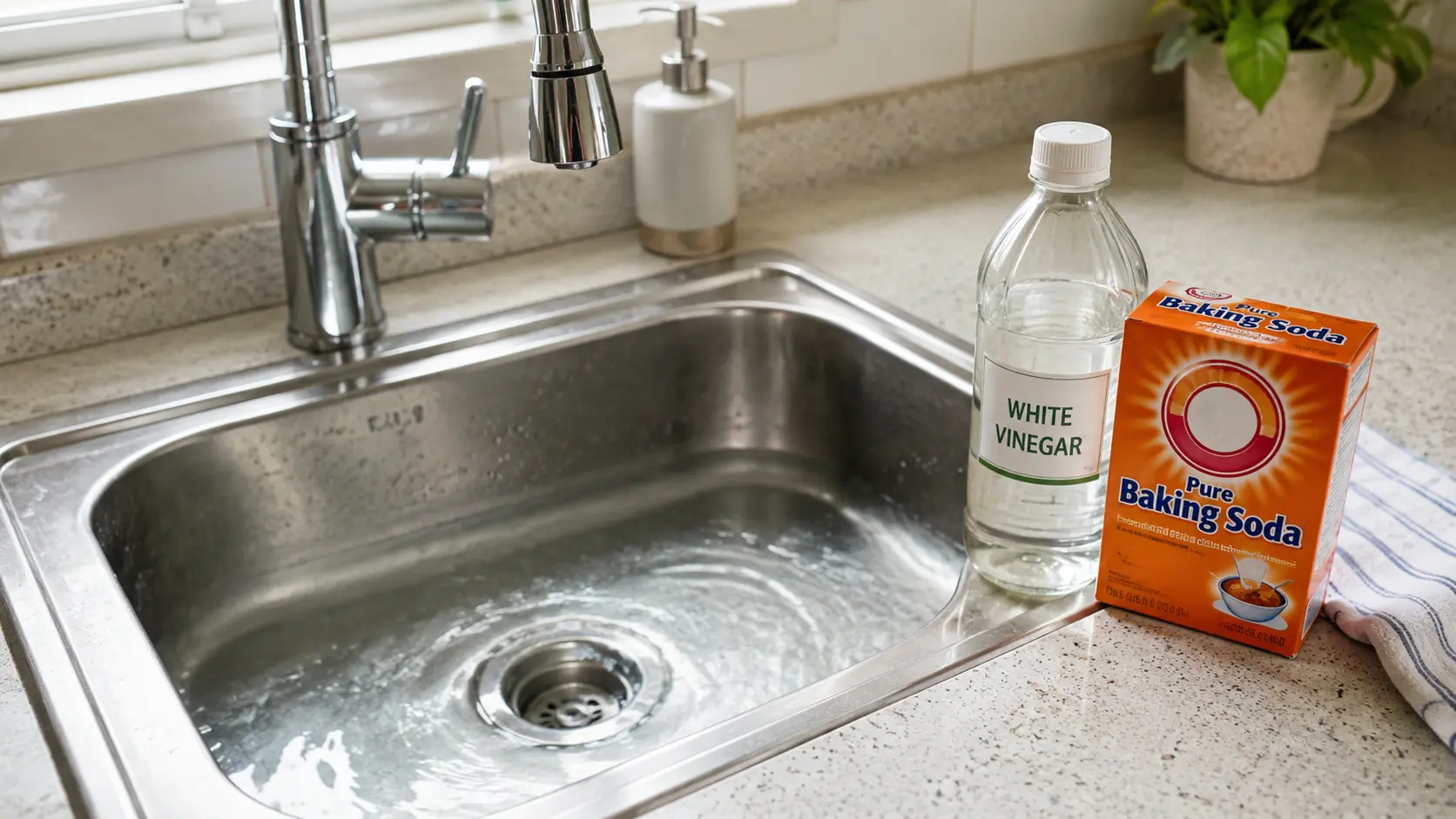
You’ve got a slow-draining sink and the internet keeps telling you to grab the baking soda and vinegar. It sounds simple, cheap, and natural but you’re wondering: is baking soda and vinegar safe for PVC pipes (and will it actually work)?
Here’s the short version: for most modern PVC drains, the mixture itself won’t melt or corrode your pipes. But it’s also not the miracle unclogged you’re hoping for. In many cases it can make things worse, or at least waste time while a real blockage gets harder to shift.
Below, I’ll break down what actually happens in your pipes, when it’s okay to try, and when you should call in a pro for Drain Unblocking Scotland.
What Actually Happens When You Mix Baking Soda and Vinegar?
Baking soda (sodium bicarbonate) and white vinegar (dilute acetic acid) react to create:
- Carbon dioxide gas (the fizz)
- Water
- Sodium acetate (a mild salt solution)
That bubbling looks impressive in a glass. In a drain, it mostly agitates the very top of the pipe. It doesn’t dissolve hair, cut through solidified grease, or break up deep blockages.
For light build-up or odour, it can freshen things up. For a real clog? It rarely reaches the problem, and the reaction loses strength as it mixes with standing water.
Is Baking Soda and Vinegar Safe for Drains and PVC Pipes?
The chemistry side
From a pure material-safety angle:
- PVC pipes: Generally safe. The reaction isn’t hot enough or acidic enough to soften or melt PVC like some harsh chemical drain cleaners can.
- Metal pipes (older homes): Repeated use of acidic solutions can slowly encourage corrosion, especially on worn or already-damaged metal.
- Rubber seals and gaskets: Constant exposure to acids and repeated fizzing pressure can wear them down over time.
So, is baking soda and vinegar safe for drains in most homes? Usually, yes in small amounts, occasionally. But “safe” doesn’t mean “effective” or “risk-free” if you overdo it.
Does Baking Soda and Vinegar Damage Pipes Over Time?
This is where opinions split.
Why some say it’s fine:
- It’s mild compared to caustic drain openers.
- No extreme heat is generated.
- It won’t instantly eat through PVC or copper.
Why plumbers are cautious:
- The gas build-up creates pressure in a closed system. In older, brittle, or poorly supported pipework, that can contribute to small leaks or joint stress over time.
- Frequent use can leave residues (salt, softened gunk) that settle and add to build-up.
- If you use it after (or before) chemical drain cleaners, you can create unpredictable reactions.
So, does baking soda and vinegar damage pipes if used once in a while on healthy PVC? Probably not. Used regularly as a “fix” for recurring clogs? That’s where problems start.
Will Baking Soda and Vinegar Damage Pipes in Older Homes?
If you’re in an older property (common in many parts of Perth, Dundee, and across Scotland), your drains may be:
- Partly metal (cast iron, copper, galvanised steel)
- Older PVC that’s become brittle
- A mix of materials with aging joints and seals
In that situation:
- The fizzing pressure can stress weak points.
- Acidic vinegar can slowly accelerate corrosion on already-worn metal.
- Any existing micro-cracks or bad joints become more likely to leak.
If your home is older and you’re seeing slow drains in multiple places, that’s a sign to get a proper check rather than experimenting with kitchen chemistry.
When It Might Be Okay (and When It’s a Bad Idea)
Okay to try (with caution)
- A slightly slow sink or shower that still drains, just not as fast.
- No standing water, just a “takes a bit longer” issue.
- You’re using it as occasional maintenance (e.g. once every couple of months) for odour and light build-up.
In these cases, a small amount of baking soda followed by vinegar, then flushed with hot (not boiling) water, is unlikely to harm healthy PVC.
Bad idea
- Completely blocked drains or standing water that won’t move.
- Multiple drains slow at once (kitchen, bathroom, toilet) suggests a main line issue.
- Recurring clogs that come back within days or weeks.
- You’ve already tried chemical drain cleaners recently.
- You live in an older property and aren’t sure what your pipes are made of.
In these situations, the mixture won’t reach the real problem and may just delay a proper fix.
Practical Tips If You Still Want to Try It
If you’re set on testing this at home, keep it controlled:
- Use moderate amounts (e.g. half a cup of baking soda, then a cup of vinegar).
- Don’t seal the drain tightly; let gas escape instead of building pressure.
- Follow with hot tap water, not boiling water, especially on PVC.
- Don’t repeat this weekly; think of it as occasional freshening, not a cure.
- If the drain doesn’t improve after one attempt, stop and consider a better method.
And remember: can baking soda and vinegar damage pipes if misused or overused? Yes, especially in older systems or when combined with other chemicals.
Common Mistakes People Make
These are the habits that turn a harmless hack into a headache:
- Using it on fully blocked drains and expecting miracles.
- Pouring boiling water straight after, which can soften PVC joints.
- Mixing with chemical drain cleaners, creating unknown reactions.
- Doing it too often, thinking “more is better” for maintenance.
- Ignoring recurring issues and assuming it’s “just a bit of gunk”.
Most serious blockages are caused by hair, soap scum, grease, food waste, or even tree roots in external lines. None of these are reliably fixed by a kitchen fizz.
Why Choose Drain Master Scotland?
At Drain Master Scotland, we see the aftermath of DIY drain experiments every week. Sometimes the home remedy works for a day; more often, it masks a deeper problem that comes back worse.
We specialise in:
- Fast, reliable drain unblocking across Perth, Dundee, and the rest of Scotland
- Professional equipment that reaches the real blockage, not just the top layer
- Clear advice on what’s causing your issue and how to prevent it coming back
If you’ve tried the baking soda and vinegar trick (or anything else) and your drains are still slow, we can get things moving properly and check for underlying issues before they turn into emergencies.
For trusted help with Drain Unblocking Scotland, visit Drain Master Scotland to get in touch.
Final Takeaway
- Is baking soda and vinegar safe for PVC pipes? In most modern systems, an occasional, careful use is unlikely to cause immediate damage.
- Will it unclog your drain? Rarely, unless the blockage is very minor and near the surface.
- Is it a good long-term strategy? No. Repeated use can stress older pipes, wear seals, and delay proper treatment.
If your drains are genuinely slow, recurring, or completely blocked, it’s smarter to get a professional assessment than to keep pouring kitchen ingredients into the problem.
FAQ’s
Is baking soda and vinegar safe for drains in all homes?
It’s usually safe for modern PVC in small amounts, but can stress older or metal pipes if used often.
Does baking soda and vinegar damage pipes over time?
Frequent use can contribute to corrosion in metal pipes and wear on seals and joints.
Will baking soda and vinegar damage pipes if I use boiling water after?
Boiling water can soften PVC and stress joints; hot tap water is safer.
Can baking soda and vinegar damage pipes if I’ve used chemical cleaners?
Mixing them with chemical drain products can create unpredictable reactions and increase risk.
What should I do if my drain is still slow after trying this?
Stop DIY attempts and book a professional drain check to find and clear the real blockage.
Need Your Drains Cleared Properly?
If your sinks, showers, or toilets are slow or blocked, don’t waste time on half-fixes. Get a fast, reliable solution from the team at Drain Master Scotland.
Visit Drain Master Scotland to book your drain unblocking today.