
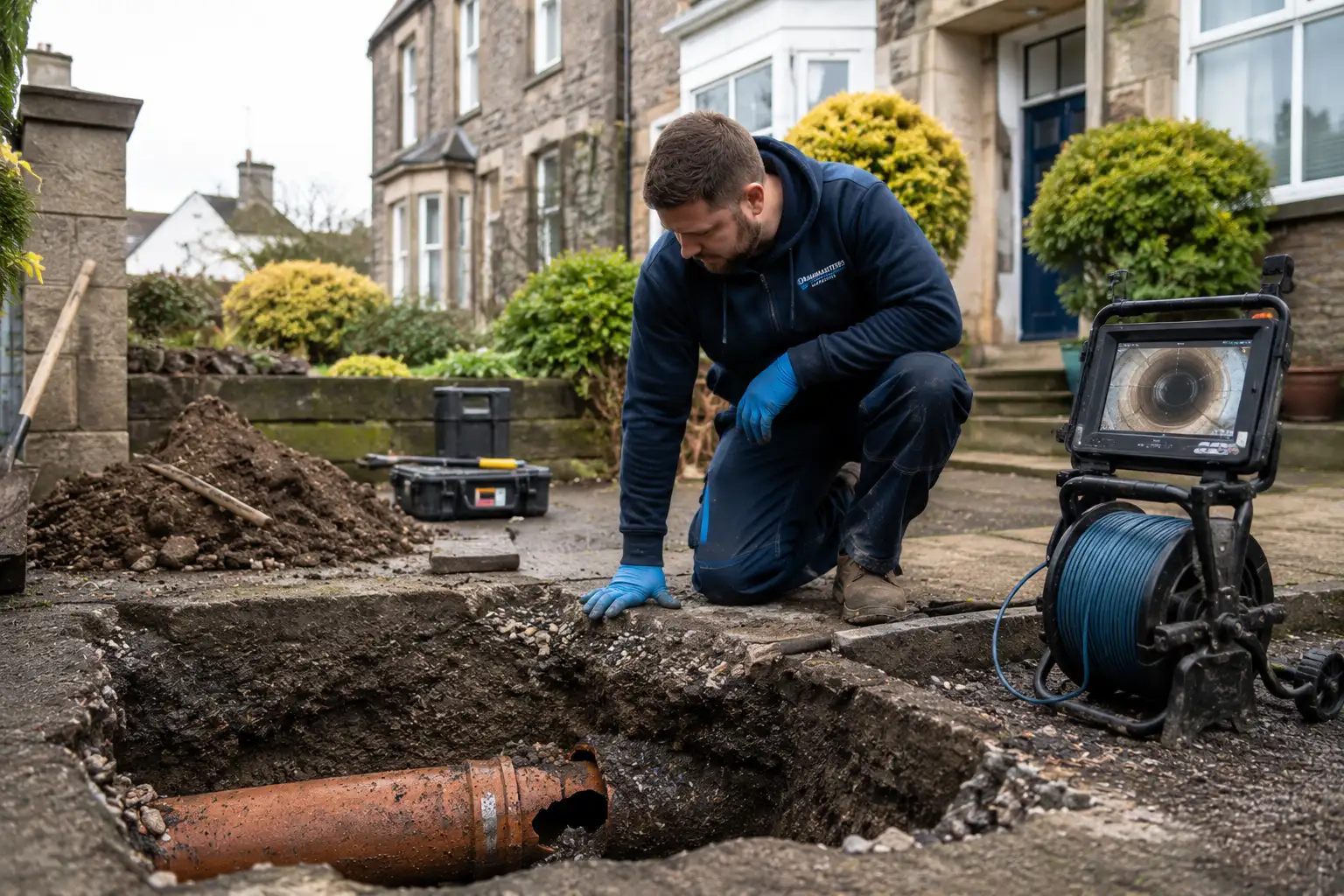
If you’re dealing with repeated blockages, foul smells, or patches of sinking ground in your garden, you might be facing something more serious than a simple clog. A what is a collapsed drain question usually comes up when normal unblocking stops working and the problem keeps coming back. In Scotland, a collapsed drain can cause flooding, sewage backup, and even structural issues if it is not dealt with quickly.
What a collapsed drain actually is
A collapsed drain is when a section of your underground drainage pipe cracks, breaks, or caves in on itself. Instead of a smooth pipe carrying wastewater away, you end up with a broken or crushed section that blocks the flow and allows waste to leak into the surrounding ground.
This is different from a simple blockage. A blockage can often be cleared with rods or jetting. A collapse usually needs more serious work, because the pipe itself has failed and can no longer do its job properly.
Why it matters
A collapsed drain is not just an inconvenience. It can cause sewage to back up into your home, create bad smells in the garden, and lead to damp patches or subsidence if the leaking water weakens the soil.
If the collapse is under a driveway, patio, or even under the house, the damage can spread quickly. That is why spotting the early signs and acting fast is so important, especially in older properties where pipes may already be under stress.
Common collapsed drain causes
Several things can lead to a drain collapse.
- Ground movement. Heavy vehicles, building work, or natural shifts in the soil can put pressure on pipes and cause them to crack or displace.
- Tree roots. Roots can grow into joints and small cracks, widening them over time until the pipe fails.
- Age and material. Old clay or cast iron pipes are more likely to crack or crush than modern plastic pipes.
- Blockages and pressure. Severe, long-term blockages can increase pressure inside the pipe and contribute to failure.
- Poor installation or past repairs. If the pipe was not laid correctly or has been badly repaired before, it may be more likely to collapse.
In many cases, it is a mix of these factors rather than just one cause.
Key collapsed drain signs
You cannot always see a collapsed drain from the surface, but there are clear warning signs.
- Repeated blockages. If the same drain keeps blocking even after clearing, the pipe may be damaged.
- Slow drainage. Sinks, toilets, or showers that drain very slowly can point to a serious restriction.
- Sewage smells. Strong odours from the garden or around outside drains can mean waste is leaking out.
- Sinking ground. Depressions, sinkholes, or soft patches in the garden or driveway often signal a leak under the surface.
- Damp or mould inside. If the leak is under the house, you may see damp patches, mould, or damage to floors and walls.
- Gurgling noises. Odd sounds from plugholes or toilets when flushing can suggest air and waste are struggling to move through the drain.
If you notice several of these signs together, a collapsed drain is a real possibility.
How a collapsed drain is diagnosed
The first step is usually a CCTV drain survey. The engineer feeds a camera through the pipe to see exactly where the damage is and how bad it is.
The footage will show whether the pipe is cracked, crushed, displaced, or invaded by roots. That information is used to decide whether the section can be repaired with a liner or needs to be dug out and replaced.
Collapsed drain repair options
There are two main ways to fix a collapsed drain.
Non-invasive repair (drain lining)
If the collapse is limited and the pipe is still in a reasonable position, a resin liner can be inserted to create a new pipe inside the old one. This avoids major digging and is often quicker.
Excavation and replacement
If the pipe is badly crushed, heavily displaced, or under a structure, the damaged section may need to be dug out and replaced with new pipework. This is more invasive but gives a long-term fix for severe cases.
In some situations, a combination of methods is used, depending on access and the extent of the damage.
Who is responsible for a collapsed drain
Responsibility depends on where the drain is located.
- Private drains within your property boundary are usually your responsibility as the homeowner.
- Shared drains that serve more than one property may have shared responsibility, and in some cases the local water authority takes over beyond a certain point.
If you are unsure, a drainage engineer can help identify which section has failed and advise on who should arrange the repair.
Collapsed drain under house
A collapsed drain under house is one of the more serious scenarios. Leaking wastewater can undermine the foundations, cause damp inside, and create health risks if sewage is seeping into the building.
In these cases, a CCTV survey is almost always needed to pinpoint the exact location. The repair may involve careful excavation, temporary support work, or lining if access is very limited.
Practical tips if you suspect a collapse
If you think you have a collapsed drain, a few steps can help limit the damage while you arrange help.
- Stop using the affected drains as much as possible.
- Do not pour chemicals into the system in hopes of clearing it.
- Keep children and pets away from any sinking ground or wet areas.
- Take photos of damp patches, sinkholes, or outside damage for your records.
- Call a professional drainage company as soon as you can.
These steps will not fix the problem, but they can reduce the risk of it getting worse.
Do’s and don’ts
Do
- Act quickly if you see repeated blockages or sewage smells.
- Use a CCTV survey to confirm whether the pipe has collapsed.
- Get clear advice on repair options and costs before work starts.
- Keep records of inspections and repairs for future reference.
Don’t
- Keep flushing or using drains that are clearly backing up.
- Assume a collapse will fix itself or stay the same.
- Choose the cheapest option without checking what is included.
- Ignore damp, subsidence, or structural warning signs.
Why choose Drain Master Scotland
Drain Master Scotland handles collapsed drain cases across Perth, Dundee, and the wider region, from diagnosis through to repair. They offer CCTV surveys, drain jetting, and full repair work, including Drain Excavation Scotland where excavation and pipe replacement are needed.
That matters because a collapsed drain often needs more than a quick unblock. You want a team that can inspect the damage, explain your options, and carry out the right fix without passing you between different companies. You can find more details on their main site at Drain Master Scotland.
Conclusion
A collapsed drain is a serious structural failure, not just another blockage. It can cause sewage backup, damp, subsidence, and ongoing plumbing problems if it is ignored.
The key is to spot the signs early, get a proper survey, and choose the right repair method for your situation. With the right help, a collapsed drain can be fixed in a way that protects your property and stops the problem coming back.
FAQ’s
What is a collapsed drain?
It is when an underground drainage pipe cracks, breaks, or caves in, stopping wastewater from flowing properly and often causing leaks.
What are the main collapsed drain signs?
Repeated blockages, slow drainage, sewage smells, sinking ground, damp inside, and gurgling noises are common signs.
Can a collapsed drain be fixed without digging?
Sometimes. Drain lining can repair some collapses, but badly crushed pipes often need excavation and replacement.
Who is responsible for a collapsed drain?
It depends on location. Private drains are usually the homeowner’s responsibility, while shared or public sections may involve the water authority.
Is a collapsed drain under house dangerous?
Yes. It can cause damp, structural damage, and health risks if sewage leaks into the building, so it should be treated as urgent.